
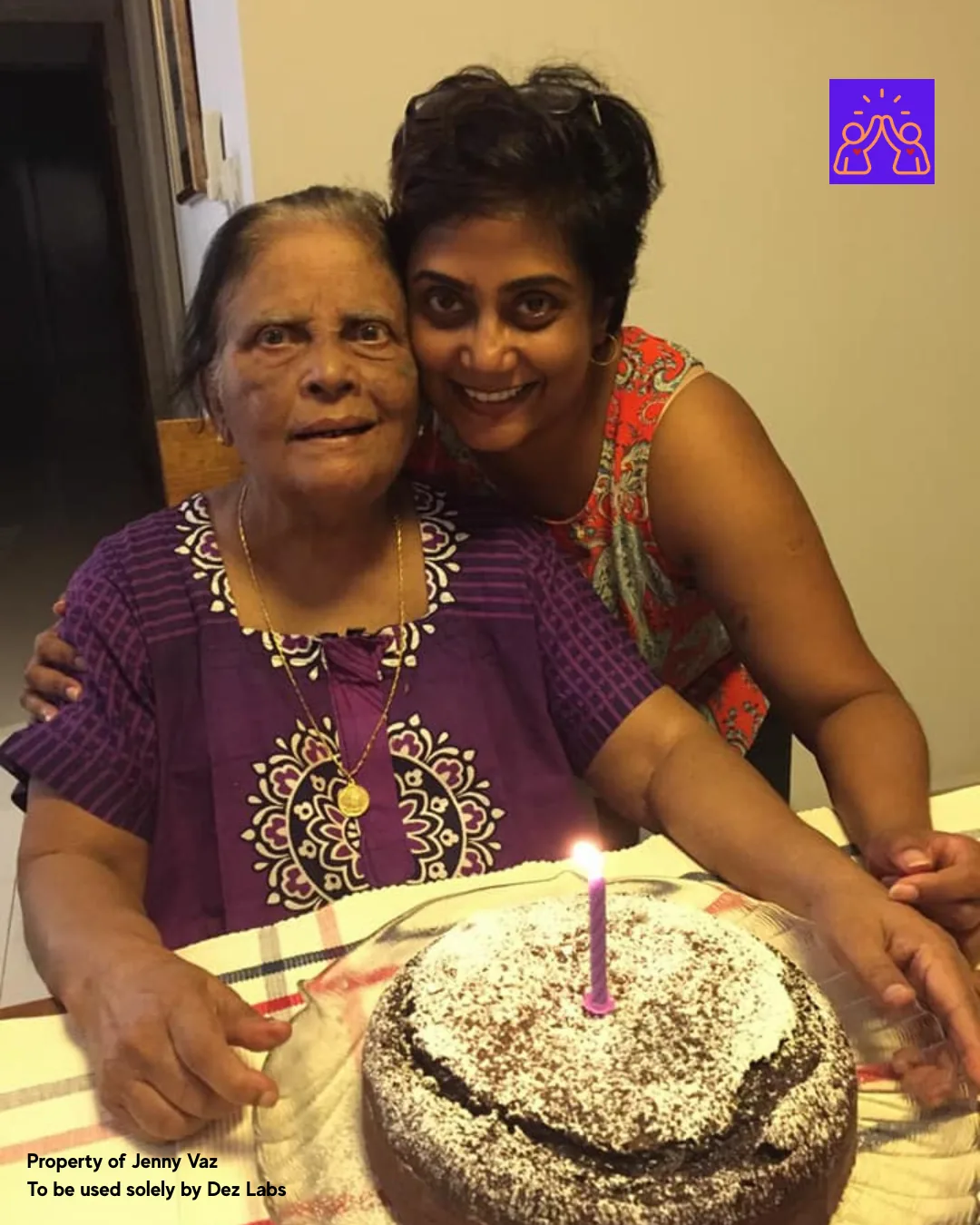

My mom used to say it over and over again, multiple times a day: "I don't want to be a burden."
At first, I responded the way any child would. I reassured her. I told her she wasn't a burden, that I loved her, that we would figure things out together. And I meant it. It wasn't a polite platitude; it was my duty and my love. After all she had done for me, how could I see her as anything else?
But she said it so often that I started to get annoyed. And then I felt guilty for being annoyed.
I didn't hate the sentiment. I hated the word.
Every time she said "burden," I heard an accusation hiding beneath the surface—not about her, but about me. In my mind, her fear was a reflection of my own perceived failings. It meant:
• You won't be able to cope.
• You'll grow to resent me.
• You aren't strong enough to carry this.
• You will fail me when it matters most.
That may not have been what she intended, but it was what I heard. It was a quiet dismissal of my love and my capacity to care. I had been preparing for this role since I was a child, aware of her health struggles from the time I was eight. I wasn't offering help out of obligation; I was offering it because I was her daughter.
So I pushed back. I tried to shut the sentence down and barred her from saying it. Not because I didn't want to hear her fears, but because I didn't want her fear to redefine who I was in the process.
What I only understood later
It took me years to understand that "burden" was just the word she could say out loud. It was the socially acceptable container for a universe of fears she couldn't bring herself to name:
• The loss of control.
• The loss of self.
• The fear of a slow, painful decline.
• The terror of the end.
She was also terrified of the cost. A mental health diagnosis made her ineligible for health insurance, and with no retirement funds, she feared leaving us with mountains of hospital bills. It's easier for a parent to say, "I don't want to be a burden," than it is to say, "I'm afraid that my health bills will bankrupt you."
When I look back now, I don't hear an accusation in her words anymore. I hear anticipatory grief. I hear a desperate attempt to hold onto her dignity in the face of something terrifying and unknowable.
Why this is so hard for adult children
Here's the part we rarely admit: when a parent repeats, "I don't want to be a burden," we don't just hear their vulnerability. We hear a judgment on ourselves. It feels like a test we didn't ask to take, and it triggers a cascade of conflicting emotions.
• Defensiveness: Do you really think I would abandon you?
• Pressure: Am I supposed to prove my love and loyalty now?
• Guilt: Why does this irritate me so much? Am I a bad person?
• Exhaustion: Why are we having this same conversation over and over again?
We then judge ourselves for feeling any of this, because we believe good children are supposed to be endlessly patient. But the emotional badgering would wear anyone down. Annoyance doesn't mean you don't care. It means the conversation is stuck in a loop, and something deeper isn't being said.
How to break the loop
If a parent says it once, reassurance is the right response. But if it's said repeatedly, reassurance just keeps you trapped. You comfort, they repeat, and nothing changes. To break the cycle, you have to respond to the fear, not just the sentence.
Instead of deflecting, try opening a new door:
• Ask them to define it: "When you say 'burden,' what does that mean to you?" Let them put their fear into their own words instead of letting your assumptions fill in the blanks.
• Reframe the issue as safety: "I'm not worried about helping you—I will always be here. I'm worried about you trying to do everything on your own and getting hurt." This shifts the focus from your sacrifice to their well-being.
• Acknowledge the deeper fear: "Are you afraid of needing help, or are you afraid of what comes after that?" Sometimes, naming the unnamable—death, decline, loss of self—is what's needed to have the real conversation.
• Offer honest commitment, not false promises: "I can't promise this will never be hard. But I can promise I will be here, and I will always give it my best." You cannot predict the future, but you can affirm your presence.
What I wish I had said
If I could go back, I wouldn't argue with the word. I would sit with her, take her hand, and say something closer to the truth:
"Mom, I know you're scared. But when you keep saying you're a burden, it makes me feel like you don't believe I can handle loving you through this. And I can. So please, tell me what you're really afraid of. I don't think it's just about needing help."
Because it wasn't. Her fear wasn't about inconveniencing me. It was about losing herself. It was about what it would mean to need others at the very end of her life.
Once I understood that, the word "burden" stopped sounding like an accusation. It started sounding like grief.
If you are in this situation now, and your parent keeps repeating that phrase, don't treat it like a problem to be solved. Treat it like a signal. It's an invitation to a deeper, more meaningful conversation about their final chapter.
And if you are the child who feels love, irritation, and guilt all at once—you are not cold. You are not selfish. You are not failing.
You are simply a human being, caring for someone who is scared of the end, while trying not to disappear yourself in the process. That tension doesn't make you a bad caregiver. It means you're in the thick of it. It means you're real.