
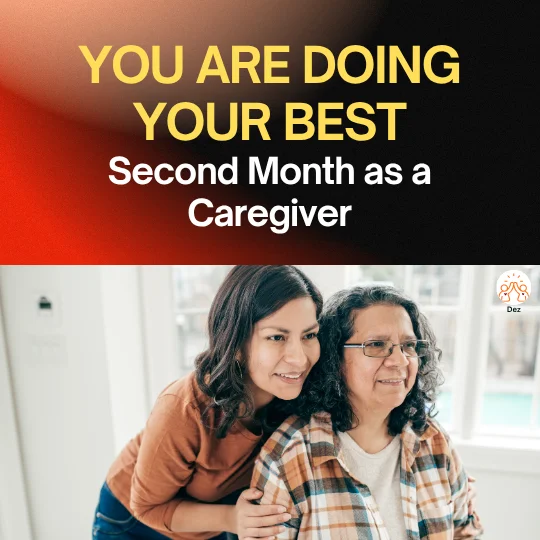
Nobody tells you what the second month feels like.
The first month, you are in emergency mode. You are reading, calling, figuring things out. You feel useful because there is so much to do.
The second month, you realise this is not an emergency. It is just Tuesday. And Wednesday. And every day after that.
If you are caring for a parent or sibling with a chronic condition right now, and you are also trying to hold down a job, a relationship or a life, I want to say something clearly: you are doing something genuinely hard. Not "hard for a normal person" hard. Hard in the way that only people who have done it understand.
The thing nobody says about dementia caregiving
Dementia is not a single moment of loss. It is many small moments, stretched across years. A conversation that does not quite land. A familiar face met with brief confusion. A good day followed by a harder one.
That pattern is exhausting in a way that is difficult to explain to people who have not lived it. You cannot plan around it. You cannot fix it with a better system or more organisation. And the grief you feel is real, even though the person you love is still here.
This is called anticipatory grief. It is recognised. It is normal. And it does not mean you are giving up.
What the research actually says, in plain language
Scientists have now identified that up to 45% of dementia cases could potentially be prevented or delayed by addressing factors like hearing loss, high blood pressure, physical inactivity, and social isolation. This is not to say anyone caused their loved one's dementia. It is to say that the medical world is learning more than it has in decades.
New blood tests can now detect Alzheimer's-related changes before major symptoms appear. New treatments are slowing the disease in its earliest stages. The research is moving faster than ever before.
That matters for your loved one. It also matters for you. Family members of people with dementia carry a higher risk themselves. Looking after your own health — your sleep, your blood pressure, your social connections — is not selfish. It is protective.
How to be an advocate without burning out
You will get advice from doctors, from well-meaning relatives, from the internet. Some of it will contradict itself. Here are a few things worth holding onto:
You are allowed to ask the same question twice. If a doctor uses a term you do not understand, ask again. Write it down.
A diagnosis is the beginning of a conversation, not the end. There are choices to be made, preferences to be expressed. Your voice matters in that process.
Asking for help — from a care coordinator, a social worker, or even just a second opinion — is not admitting defeat. It is good management.
One more thing
The system runs on people like you. And the system rarely says thank you.
In the way of someone who understands that you showed up today for someone who needs you. That is not nothing. That is everything. Take it from someone who knows; I have four family members with chronic conditions and been doing it since I was eight years old.
Thank you for what you're doing and how you're showing up right now. You are doing your best!
If you are looking for tools to help carry the daily load, Dez was built with exactly that in mind.