
A clinical and economic analysis for health systems, insurers, and care innovators.
The Scale of the Crisis
Dementia is no longer a condition to be managed quietly at the edges of health systems. It sits at the centre of one of the most consequential demographic shifts in modern medicine. More than 55 million people worldwide are currently living with dementia, and that figure is projected to reach 78 million by 2030 and 139 million by 2050. A new case is diagnosed every three seconds. No other age-related neurological condition approaches this scale of prevalence, projected growth, or structural impact on health systems.
The geographic concentration of that burden is shifting in ways that demand strategic attention. Today, 60% of people with dementia live in low and middle income countries. By 2050, that proportion will rise to 71%, placing extraordinary strain on health systems that have the fewest resources to respond. In the United States, the USC Schaeffer Center's 2025 Cost of Dementia Model — which counts clinically recognised cases — estimates 5.6 million Americans are currently living with dementia.6 The Alzheimer's Association's 2025 Facts and Figures report, which uses epidemiological projection models including undiagnosed cases, puts the figure for Alzheimer's disease alone at 7.2 million Americans aged 65 and older, projected to reach 13.8 million by 2060.1 The gap between these figures reflects real diagnostic underdetection — not a data error — and is itself a policy problem. In China, an estimated 10 million people are currently living with dementia; projections for 2030 vary considerably by model, with some estimates approaching 16–18 million depending on assumptions about population ageing and vascular risk trends. India's approximately 5.3 million are broadly expected to triple by 2050.5
A landmark 2025 analysis published in Frontiers in Public Health examined the global burden of Alzheimer's disease and other dementias across adults aged 65 and older between 1991 and 2021.2 The findings confirm an accelerating trajectory shaped by population ageing, vascular risk factors, and widening inequities in access to preventive care. In the United States, a January 2025 study by Fang et al. using ARIC cohort data (15,043 participants, 26.9% Black, free of dementia at age 55) estimated the lifetime risk of dementia from age 55 at 42% (95% CI: 41–43%) — more than double prior estimates, with risks reaching 45–60% in women, Black adults, and ApoE4 carriers.29 This finding fundamentally reframes how US clinicians and insurers should model long-term risk across their member populations, though international figures differ by population structure and methodology.
Understanding the Disease: A Taxonomy That Matters Clinically
"Dementia" is an umbrella term. For clinicians, researchers, and health system planners, understanding the underlying taxonomy is essential to allocating resources accurately and designing interventions that match the aetiology.
Alzheimer's disease accounts for 60 to 70% of all dementia cases, making it the dominant clinical priority and the primary target for the current wave of disease-modifying therapies. Vascular dementia, caused by reduced or blocked blood flow to the brain, accounts for approximately 15% of cases and shares substantial overlap with cardiovascular and metabolic risk factors. Lewy body dementia — characterised by abnormal protein deposits in nerve cells — accounts for roughly 10 to 15% of cases, though it remains significantly underdiagnosed due to symptom overlap with Parkinson's disease and Alzheimer's. Frontotemporal dementia, which disproportionately affects individuals under 65, represents an important but clinically distinct challenge, with prevalence of 15 to 22 per 100,000 in the general population.
Critically, the NIH's 2025 Research Progress Report notes that mixed dementia is now recognised as the most common form overall: the co-occurrence of Alzheimer's pathology with vascular damage or Lewy body deposits is far more prevalent than previously understood, a finding that complicates both diagnosis and treatment selection.3 This has direct implications for clinical trial design, biomarker interpretation, and the real-world effectiveness of amyloid-targeted therapies in a mixed-pathology population.
The Diagnostic Gap: 3.5 Years Lost
One of the most significant and underappreciated structural failures in dementia care is diagnostic delay. A 2025 systematic review and meta-analysis published in the International Journal of Geriatric Psychiatry found that the average time from symptom onset to confirmed dementia diagnosis across all subtypes is 3.5 years.4 For young-onset dementia, the delay extends to 4.1 years. For frontotemporal dementia, delays of five years or more are not uncommon.
This diagnostic gap is not merely a clinical inconvenience. It is a period during which disease-modifying intervention is unavailable, caregivers are operating without professional frameworks, advance care planning is absent, and health care utilisation is disorganised and reactive. In primary care settings, even where access is good, research suggests that only 20 to 50% of dementia cases are recognised before they progress to moderate severity. In low- and middle-income countries, one study in India estimated that 90% of people with dementia remain undiagnosed.5
For insurers designing care models, the diagnostic delay represents a compressible interval with direct implications for downstream cost. Patients diagnosed earlier are more likely to receive coordinated care, engage in advance planning, and avoid the high-cost acute episodes that characterise late-stage, late-diagnosed dementia.
The Economic Weight on Health Systems
The economic cost of dementia in the United States reaches $781 billion in 2025, according to the United States Cost of Dementia Model published by the USC Schaeffer Center for Health Policy and Economics.6 Of the $232 billion in direct medical and long-term care costs, Medicare bears $106 billion, Medicaid $58 billion, and individuals and families absorb $52 billion in out-of-pocket spending. Yet direct costs represent only 30% of the total economic impact.
The remaining 70% reflects the invisible economy of caregiving. Family members and friends provide an estimated 6.8 billion hours of unpaid care annually, valued at $233 billion. An additional $8 billion in annual earnings is lost as care partners reduce working hours or exit the workforce entirely. For insurers, this hidden economy is material: caregiver burden is strongly associated with higher patient hospitalisation rates, emergency department utilisation, and unplanned care transitions - all of which appear in claims data.
Globally, the picture is even more stark. Global spending on dementia reached approximately $600 billion in 2019 and is projected to exceed $2 trillion by 2050.7 Yet that spending is deeply inequitable in its distribution: by 2050, an estimated 57% of total global dementia spending will occur in high-income countries, even though only 26% of cases are projected to be located there. The economic burden falls heaviest where clinical resources are thinnest.
A 2025 study published in Innovation in Aging analysed current and future replacement and opportunity costs of family caregiving for older Americans with and without dementia.8 The findings are unambiguous: the burden on informal carers is large, growing, and disproportionately carried by women and lower-income households. For managed care organisations designing value-based care models, this cost structure demands more than clinical intervention. It demands infrastructure for the caregiver.
Hospitalisation, Avoidable Admissions, and the Claims Case for Intervention
People living with dementia are hospitalised at significantly higher rates than age-matched controls, and the associated costs are substantial. Medicare costs for beneficiaries aged 65 and older with Alzheimer's disease or other dementias run approximately three times higher than for those without the condition — estimated at around $41,757 per person annually versus $14,026 for non-dementia beneficiaries in 2021 dollars.91 Emergency department visits are frequent, often precipitated by behavioural and psychological symptoms, falls, infections, or medication side effects that, in a well-supported home environment, might have been managed without acute escalation.
Critically, between 20 and 40% of hospitalisations in people with dementia are considered potentially avoidable — measurable through 30-day readmission rates, ambulatory care-sensitive condition admissions, and injury-related presentations. A population-wide US study found approximately 40% of hospitalisations in older adults with diagnosed dementia to be for ambulatory care-sensitive conditions.10 Narrative reviews of readmission literature place the avoidable fraction at 20–40%.11 Research consistently shows that caregiver depression is independently associated with increased emergency department utilisation by the person with dementia — establishing a direct, measurable mechanism by which investing in caregiver mental health translates into reduced acute care expenditure.
For health plans operating under value-based contracts or capitated payment structures, this avoidable fraction represents a concrete, addressable opportunity. A 2025 umbrella review of psychosocial and care coordination interventions found that evidence on reducing hospitalisation overall remains mixed, with insufficient certainty to make firm recommendations across all intervention types; advance care planning showed low-certainty promise, and the authors called for higher-quality trials.12 That said, targeted caregiver mental health support has the clearest mechanistic and epidemiological case for reducing avoidable acute utilisation.
The Caregiver Mental Health Crisis Within the Crisis
The mental health impact on dementia caregivers is extensive, persistent, and undertreated. A systematic review and integrative literature analysis covering studies from 2014 to 2024 found rates of depression in 30 to 40% of dementia caregivers, and anxiety in 32 to 44%.13 Some studies report depression in up to 60% of caregivers, particularly those providing intensive, long-duration care. Female caregivers are disproportionately affected. Depression and anxiety in caregivers correlate not only with carer deterioration but with substance use and with worsened outcomes for the person with dementia.
Caregiver burnout is not merely a humanitarian concern. It drives care breakdown, premature institutionalisation, and increased acute health system utilisation. Burnout among informal carers is one of the strongest predictors of earlier nursing home placement - a transition that typically costs Medicare and Medicaid substantially more than community-based supported care. Health systems and insurers that treat caregiver mental health as a peripheral concern are, in effect, accepting a higher-cost care trajectory.
The structural implication is clear: any serious dementia care model must treat the caregiver as a clinical entity in their own right, with access to mental health support, respite services, and care coordination that reduces the cognitive and emotional load of managing a chronic, progressive condition without adequate professional scaffolding.
A Diagnostic Breakthrough: Blood-Based Biomarkers
One of the most consequential clinical developments of recent years is the emergence of blood-based biomarkers for Alzheimer's disease - a shift that promises to transform both early detection and access to disease-modifying therapy.
In May 2025, the FDA granted its first clearance to a blood test to aid in Alzheimer's diagnosis: the Lumipulse assay, measuring phosphorylated tau 217 (p-tau217) and amyloid beta ratios from a peripheral blood sample.14 This was followed in October 2025 by C2N Diagnostics submitting its PrecivityAD2 HRMS platform to the FDA — the first multi-analyte algorithmic blood test using high-resolution mass spectrometry for assessment of Alzheimer's pathology. An earlier 2024 study funded partly by the National Institute of Health demonstrated that the PrecivityAD2 test accurately predicted Alzheimer's disease pathology in 88% to 92% of 799 participants.15
The implications for payers and health systems are significant. Amyloid PET imaging costs between $3,000 and $5,000 per scan and is available at relatively few sites. Lumbar puncture, while clinically validated, remains unsuitable for widespread screening due to invasiveness. Blood-based biomarker screening, once costs normalise, could enable systematic identification of early-stage Alzheimer's in primary care, creating a scalable and clinically viable pathway for disease-modifying therapy before significant cognitive decline. For insurers, this is a coverage decision that sits at the intersection of diagnostic access and therapeutic pipeline management — and the policy decisions made in the next two to three years will shape population-level outcomes for a generation.
Disease-Modifying Therapies: A New Era, With Caveats
Two anti-amyloid monoclonal antibodies have now received FDA approval: lecanemab (Leqembi) and donanemab (Kisunla). Both have demonstrated statistically significant slowing of cognitive decline in early-stage Alzheimer's disease, clearing amyloid beta from the brain and modestly but meaningfully altering the disease trajectory. Neither is a cure. Both represent a genuine and historic shift in what is clinically possible.
Lecanemab received full FDA approval in July 2023 and has continued to accumulate label expansions. In January 2025, the FDA approved once-every-four-weeks maintenance dosing; by August 2025, weekly subcutaneous maintenance dosing had also been approved - a significant advance in patient convenience that removes the need for repeated infusion centre visits. Donanemab offers a monthly infusion schedule with the possibility of stopping treatment once amyloid clearance is confirmed on imaging, a feature with meaningful implications for long-term cost modelling.16
For health system planners and insurers, the clinical evidence requires careful framing. Both drugs carry a risk of amyloid-related imaging abnormalities (ARIA) - brain swelling or microbleeds - that are more common in ApoE4 carriers and require serial MRI monitoring. The infrastructure requirements for safe administration are not trivial: specialist referral pathways, radiology capacity, and patient selection criteria all add operational complexity to what the trial data might suggest is a straightforward coverage decision.
Looking ahead, as of March 2025, at least 25 new drug candidates developed with NIH funding had advanced to human clinical trials, with 18 in Phase I and seven in mid-to-late stage Phase II or III trials.3 The pipeline is diverse. Beyond amyloid clearance, researchers are targeting tau aggregation, neuroinflammation, mitochondrial dysfunction, and synaptic resilience. An effective oral therapy - which blarcamesine, currently in Phase II/III trials, may prove to be - would fundamentally alter the access and adherence landscape.
Prevention: The 45–49% Opportunity
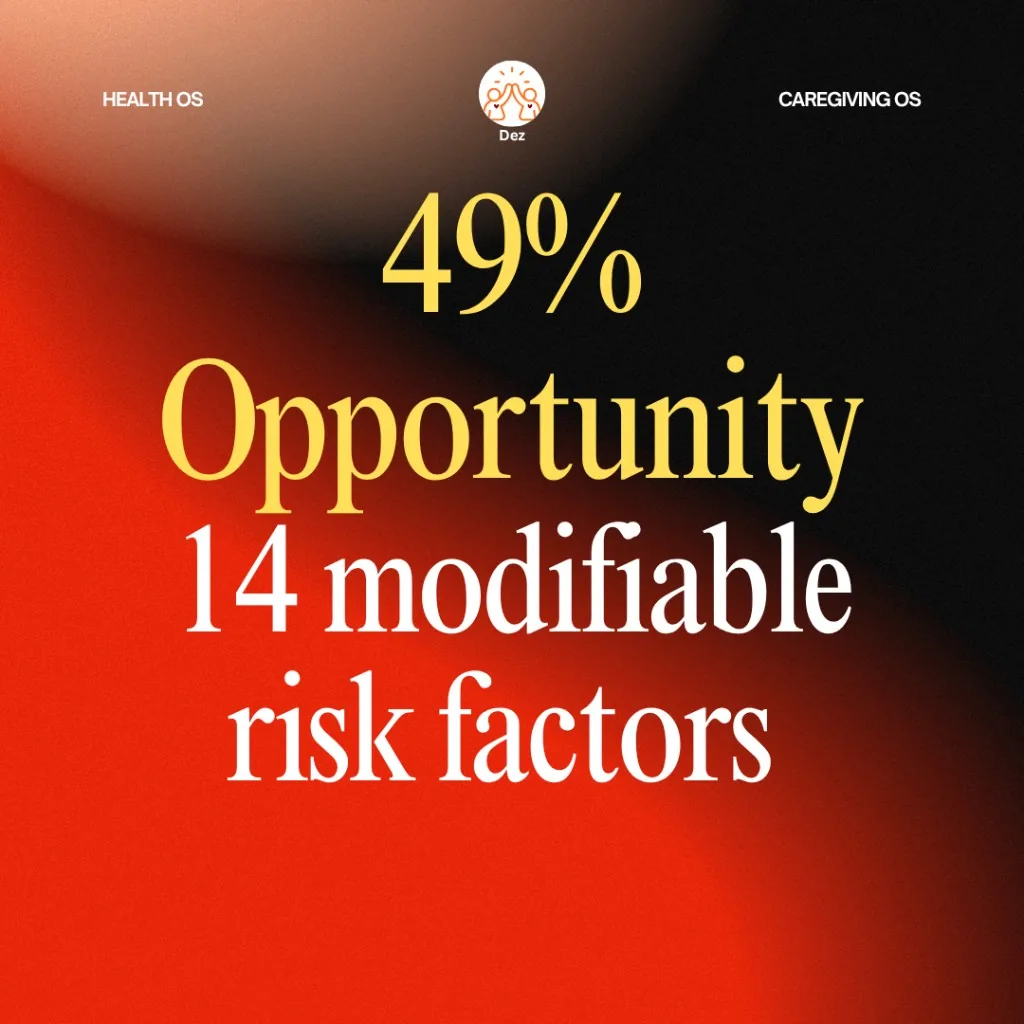
The 2024 Lancet Commission on Dementia Prevention, Intervention and Care — considered the definitive evidence synthesis on modifiable risk — identified 14 factors whose elimination or reduction could prevent or delay nearly half of all dementia cases worldwide. Two factors were new additions to the 2020 framework: high LDL cholesterol in midlife (accountable for an estimated 7% of cases) and untreated vision loss in later life (accountable for 2%).17
The complete 14 modifiable risk factors:
- Low educational attainment in early life
- Hearing loss
- Hypertension
- Obesity
- Smoking
- Depression
- Physical inactivity
- Diabetes
- Excessive alcohol consumption
- Traumatic brain injury
- Air pollution
- Social isolation
- High LDL cholesterol (midlife) - newly identified in 2024
- Untreated vision loss - newly identified in 2024
Notably, four factors previously classified as late-life risks — smoking, depression, physical inactivity, and diabetes — were reclassified as midlife risks in the 2024 update. This is not a minor definitional adjustment. It means that the window for effective prevention is substantially earlier in the life course than previously understood, and that interventions targeting these factors in adults aged 40 to 65 carry genuine long-term brain health implications.
A note on the Lancet framework's reception and limitations. The 2024 Commission report has been broadly accepted by the neurological and public health research community as the strongest available synthesis of prevention evidence. However, it has attracted substantive critical commentary that practitioners should be aware of. Post-publication analyses have noted that the evidence base is drawn predominantly from high-income country cohorts, raising questions about the generalisability of population attributable fractions to low and middle income settings where the majority of future cases will arise.18 Critics have also highlighted the omission of several candidate risk factors, most notably sleep disturbance, poverty and income inequality, and viral infections (including the now-documented association between certain herpes viruses and dementia risk), from the final 14-factor framework. A 2025 Lancet correspondence further noted that 57% of the identified risk factors are more prevalent in men, despite dementia disproportionately affecting women. These are not arguments against the Commission's conclusions; they are reasons to treat the 45–49% prevention estimate as a floor rather than a ceiling, and to apply the risk framework with attention to local epidemiological context. The World-Wide FINGERS network's ongoing replication of lifestyle intervention trials across 60 countries is helping to address the generalisability gap with region-specific evidence.19
For managed care organisations with longitudinal member relationships, this reframing creates a compelling case for chronic disease management programmes explicitly framed around cognitive health. Cardiovascular risk reduction, hearing aid provision, depression screening and treatment, and social prescribing are not new services. They are existing capabilities whose dementia-prevention value is now quantified and should be communicated accordingly to clinicians, members, and commissioning bodies.
Global Clinical Advances: Beyond the United States
The dominant narrative in dementia research has historically been written from a North American and Western European vantage point. That is changing — and the policy and clinical developments in Asia Pacific, in particular, represent some of the most significant structural shifts underway in dementia care globally.
Japan has moved faster and more decisively than most nations at the legislative and clinical level. In June 2023, Japan enacted the Basic Law on Dementia, the first national legislation of its kind explicitly embedding dementia prevention, early detection, and support for people with dementia and their families into law. The law came into force in January 2024, coinciding with Japan's regulatory approval of lecanemab - the first disease-modifying therapy approved in the country. At the G7 Health Ministers' Meeting in Nagasaki, member states collectively committed to strengthening early detection, diagnosis, and treatment programmes for dementia, including a formal welcome for disease-modifying therapies. Japan's experience matters globally: with one of the oldest populations in the world and approximately 4.43 million people living with dementia as of 2022 (Ministry of Health, Labour and Welfare), with forecasts reaching 5.84 million by 2040, Japan has been stress-testing dementia care systems that other nations have yet to reach.20
South Korea has seen a 65% increase in dementia prevalence in a single decade - rising from approximately 610,000 in 2014 to over one million in 2024, with projections of approximately 2.71 million by 2050, per official Korean planning estimates. Lecanemab was approved by Korea's Ministry of Food and Drug Safety in May 2024. South Korea has also built one of the most comprehensive national dementia management infrastructures in the world, structured around five domains: prevention and awareness, early detection, case registration and management, community resource networking, and digital monitoring. Initiatives including "Ten Million Citizen Memory Friends," community Memory Cafes, and Dementia-Friendly Village programmes represent a community integration model that is generating significant research interest internationally.21 A 2025 study using interpretable machine learning to identify predictive factors for dementia among Korean older adults represents a model for national data-driven prevention planning.22
Australia reached a significant milestone in May 2025 when the Therapeutic Goods Administration (TGA) approved donanemab, the first disease-modifying therapy registered in Australia. Lecanemab followed in September 2025, giving Australian clinicians access to two anti-amyloid therapies with distinct dosing profiles. Beyond these approvals, one of the most closely watched global trials in dementia research is now running in Australia and New Zealand. Researchers at the Royal Melbourne Hospital and Monash University are conducting a Phase 2b randomised, double-blind, placebo-controlled trial of sodium selenate as a disease-modifying treatment for behavioural variant frontotemporal dementia (bvFTD) - a subtype for which there are currently no approved disease-modifying therapies anywhere in the world. Phase 1b results demonstrated that sodium selenate is safe and well-tolerated over 12 months, with most participants showing reduced rates of brain atrophy during the treatment period. Phase 2b results, when available, will be closely watched: FTD predominantly affects younger patients and represents one of the most underserved areas of dementia therapeutics.23
Europe has been at the forefront of prevention science. The FINGER study (Finnish Geriatric Intervention Study to Prevent Cognitive Impairment and Disability) was the first large-scale randomised trial in the world to demonstrate that multidomain lifestyle interventions combining dietary guidance, physical activity, cognitive training, social engagement, and cardiovascular risk monitoring can meaningfully preserve cognitive function over a two-year period. This finding directly underpins several of the Lancet Commission's risk factor recommendations and has since spawned the Worldwide FINGERS network, a global replication initiative active across 60 countries.24 The EPAD (European Prevention of Alzheimer's Dementia) programme, a €64 million collaborative, created the first pan-European register of people at risk for developing dementia, a database of over half a million individuals, enabling secondary prevention research at a scale previously unavailable in Europe.25
Taken together, these international advances reflect a global research community that is increasingly aligned around early detection, prevention infrastructure, and community-level care integration. A 2025 spotlight on Alzheimer's and related dementias research in East Asia, published in Alzheimer's and Dementia, noted that China, Japan, South Korea, and Singapore have collectively invested hundreds of billions of dollars in solutions for Alzheimer's disease, yielding significant advances in plasma and imaging biomarkers, digital biomarkers, anti-amyloid biologics, and multidomain lifestyle interventions.26
Equity, Genetics, and the Unequal Burden of Risk
No analysis of dementia's clinical and public health dimensions is complete without addressing the profound inequities in who bears the burden of disease, who receives timely diagnosis, and who will have access to new therapeutics.
Black and Hispanic adults in the United States carry a disproportionately higher risk of all-cause dementia compared to non-Hispanic white adults. A 2025 analysis from the NIH All of Us Research Program, examining nearly 85,000 participants aged 60 and older, confirmed that ApoE4 carrier status is associated with comparable hazard ratios across Black, Hispanic, and white populations — but importantly, ApoE4 carrier rates appear elevated in Black participants compared to the general population average, with estimates varying across studies.27 This means the risk pool is larger in communities that are simultaneously less likely to receive timely diagnosis and more likely to face structural barriers to new therapies.
In addition, the ABCA7 gene variant has been shown to have stronger associations with dementia in individuals of African ancestry than in those of European ancestry, pointing to both under-studied genetic risk pathways and the urgency of diversifying research cohorts. Health systems and payers committed to equity must account for these differential risk profiles in population screening strategies, outreach models, and clinical trial recruitment, not merely as a matter of fairness, but as a matter of actuarial accuracy.
Emerging Technology and Remote Monitoring
Beyond pharmacological advances, a new generation of digital tools is emerging with significant implications for care delivery outside the clinical setting. AI-powered monitoring and wearable devices are enabling continuous tracking of cognitive and behavioural changes, allowing clinicians to identify deviations from individual baselines rather than relying on periodic snapshots taken months apart. Research presented at the World Economic Forum in April 2026 highlighted nine recent breakthroughs in Alzheimer's research, several of which centred on the use of digital biomarkers and ambient sensors to detect early cognitive change.28
InBrain, recognised as a 2025 Technology Pioneer, has developed an ultra-thin graphene neural implant capable of detecting neural signals and delivering targeted electrical stimulation. Initially applied to Parkinson's disease, the company has announced plans to extend its platform to dementia. Passive digital phenotyping - monitoring speech patterns, gait, keystroke dynamics, and sleep through ambient devices — is increasingly demonstrating predictive validity for cognitive trajectory, offering a non-invasive complement to clinical assessment.
For care coordinators and home-based care providers, these tools represent a meaningful shift in monitoring capacity. For insurers, they represent a pathway to earlier identification of deterioration events, allowing proactive clinical intervention before expensive acute episodes occur.
Implications for Payers and Health Systems: A Strategic Framework
The convergence of improved diagnostics, disease-modifying therapies, an expanded prevention evidence base, and digital monitoring tools creates both opportunity and complexity for insurers and health systems. The following five strategic priorities should sit at the centre of any serious dementia care framework.
- Invest in diagnostic infrastructure before therapeutic demand outpaces capacity. Blood-based biomarker tests will drive a significant increase in early Alzheimer's identification. Health systems that have not built referral pathways, specialist capacity, and ARIA monitoring infrastructure will face bottlenecks precisely when clinical urgency is highest.
- Design coverage frameworks for anti-amyloid therapies with equity at the centre. Lecanemab and donanemab are approved for early-stage disease - a stage that, due to diagnostic delays, disproportionately excludes lower-income and minority patients. Coverage decisions that do not simultaneously address diagnostic access will produce benefits skewed toward those already advantaged by the health system.
- Treat caregiver support as a clinical investment, not a social service. The evidence linking caregiver mental health to patient hospitalisation rates is robust. Depression and burnout in informal carers drives measurable, avoidable acute care utilisation. Mental health support, care coordination, and respite services for carers are not peripheral considerations. They are cost-effective clinical interventions with a traceable return in claims data.
- Reframe prevention as a core actuarial strategy. The Lancet Commission's 45–49% prevention figure is not aspirational. It is built on modifiable risk factors that overlap directly with programmes managed care organisations already operate: cardiovascular risk reduction, diabetes management, hearing health, depression treatment, and social isolation programmes. Explicitly linking these to dementia prevention strengthens their evidence base and member engagement case.
- Build for the long game. Dementia is a condition measured in years, not episodes. Members diagnosed in their 60s will be living with disease progression for a decade or more. Care models designed around acute episode management will continue to underperform. Longitudinal, whole-person frameworks, integrating clinical, social, and informal care, are the only structures capable of bending the cost curve while improving outcomes.
References
- 1. Alzheimer's Association. 2025 Alzheimer's disease facts and figures. Alzheimers Dement. 2025. PMC12040760. https://pmc.ncbi.nlm.nih.gov/articles/PMC12040760/
- 2. Global burden of Alzheimer's disease and other dementias across adults aged 65 and older, 1991–2021. Front Public Health. 2025. doi:10.3389/fpubh.2025.1585711. https://www.frontiersin.org/journals/public-health/articles/10.3389/fpubh.2025.1585711/full
- 3. National Institute on Aging. 2025 NIH Dementia Research Progress Report. Bethesda, MD: NIA; 2025. https://www.nia.nih.gov/about/2025-nih-dementia-research-progress-report
- 4. Time to diagnosis in dementia: systematic review and meta-analysis. Int J Geriatr Psychiatry. 2025. PMC12300619. https://www.ncbi.nlm.nih.gov/pmc/articles/PMC12300619/
- 5. Alzheimer's Disease International. Dementia statistics. London: ADI. https://www.alzint.org/about/dementia-facts-figures/dementia-statistics/
- 6. USC Schaeffer Center for Health Policy and Economics. The cost of dementia in 2025. Los Angeles, CA; April 2025. https://schaeffer.usc.edu/research/the-cost-of-dementia-in-2025/
- 7. Global and regional spending on dementia care from 2000–2019 and expected future health spending scenarios from 2020–2050. Lancet eClinicalMedicine. PMC8921543. https://pmc.ncbi.nlm.nih.gov/articles/PMC8921543/
- 8. Replacement and opportunity costs of family caregiving for older Americans with and without dementia. Innov Aging. 2025;9(6):igaf049. https://academic.oup.com/innovateage/article/9/6/igaf049/8154280
- 9. The economic and societal burden of Alzheimer disease: managed care considerations. Am J Manag Care. https://www.ajmc.com/view/economic-burden-of-alzheimer-disease-and-managed-care-considerations
- 10. National trends in potentially preventable hospitalizations of older adults with dementia. J Am Geriatr Soc. PMC7811187. https://pmc.ncbi.nlm.nih.gov/articles/PMC7811187/
- 11. Determinants of hospital readmissions in older people with dementia: a narrative review. PMC11015733. https://pmc.ncbi.nlm.nih.gov/articles/PMC11015733/
- 12. The effect of psychosocial and healthcare interventions on hospitalisation in people with dementia: an umbrella review. medRxiv. 2025. https://www.medrxiv.org/content/10.1101/2025.10.13.25337873v1.full
- 13. Burden of informal caregivers for persons with dementia: systematic review. PMC12742944. https://pmc.ncbi.nlm.nih.gov/articles/PMC12742944/
- 14. FDA clears first blood test to aid in Alzheimer's diagnosis (Lumipulse). BrightFocus Foundation; 2025. https://www.brightfocus.org/news/fda-clears-first-blood-test-to-aid-in-alzheimers-diagnosis/
- 15. PrecivityAD2 blood test validation for Alzheimer's pathology. PMC11764142. https://www.ncbi.nlm.nih.gov/pmc/articles/PMC11764142/
- 16. FDA approves LEQEMBI IQLIK (lecanemab-irmb) subcutaneous injection for maintenance dosing. Eisai Co., Ltd.; August 2025. https://www.eisai.com/news/2025/news202559.html
- 17. Lancet Commission on dementia prevention, intervention and care (2024 update). Lancet. 2024. https://www.eurekalert.org/news-releases/1052982
- 18. Generalisability of Lancet Commission population attributable fractions. PMC12509747. https://pmc.ncbi.nlm.nih.gov/articles/PMC12509747/
- 19. Expert reaction to the 2024 Lancet Commission report. Science Media Centre; 2024. https://www.sciencemediacentre.org/expert-reaction-to-2024-lancet-commission-report-on-dementia-prevention-intervention-and-care/
- 20. Mimura M. Japan's Basic Law on Dementia and disease-modifying therapy approval. Psychiatry Clin Neurosci. 2024. doi:10.1111/pcn.13713. https://onlinelibrary.wiley.com/doi/10.1111/pcn.13713
- 21. Korean national dementia management infrastructure. Korean Dementia Association IC-KDA/ASAD 2025. PMC12599462. https://pmc.ncbi.nlm.nih.gov/articles/PMC12599462/
- 22. Predictive factors for dementia among Korean older adults using interpretable machine learning. Alzheimers Res Ther. 2025. doi:10.1186/s13195-025-01871-y. https://link.springer.com/article/10.1186/s13195-025-01871-y
- 23. Sodium selenate for probable behavioural variant frontotemporal dementia (Phase 2b). Royal Melbourne Hospital. https://www.thermh.org.au/research/clinical-trials-research-studies/sodium-selenate-for-probable-behavioural-variant-frontotemporal-dementia
- 24. Ngandu T, et al. FINGER multidomain lifestyle intervention trial. PMC7222931. https://www.ncbi.nlm.nih.gov/pmc/articles/PMC7222931/
- 25. European Prevention of Alzheimer's Dementia (EPAD) programme. Innovative Health Initiative. https://www.ihi.europa.eu/projects-results/project-factsheets/epad
- 26. Alzheimer's and related dementias research spotlight: East Asia. Alzheimers Dement. 2025. doi:10.1002/alz.70479. https://alz-journals.onlinelibrary.wiley.com/doi/10.1002/alz.70479
- 27. Impact of APOE4-related dementia risk in underrepresented groups from the All of Us Research Program. PMC12159303. https://pmc.ncbi.nlm.nih.gov/articles/PMC12159303/
- 28. Nine recent breakthroughs in Alzheimer's research. World Economic Forum; April 2026. https://www.weforum.org/stories/2026/04/alzheimers-disease-breakthroughs-health/
- 29. Fang M, Hu J, Weiss J, et al. Lifetime risk and projected burden of dementia. Nat Med. 2025. doi:10.1038/s41591-024-03340-9. https://www.nature.com/articles/s41591-024-03340-9